Receiving a CP14 notice from the IRS can be stressful, especially if it is your first IRS bill notice. A CP14 notice IRS letter is not an audit, tax lien, or levy. It is the IRS’s first official bill, notifying you that you have an unpaid tax balance and that you need to take action. Responding on time can help you avoid additional penalties, interest, and future collection actions.
If you are wondering what a CP14 notice is, how to respond to CP14, or what the CP14 response deadline means, this guide is for you. It explains why you received the notice, how to understand it, and what to do next if you agree with the balance, disagree with it, or are unable to pay.
Key Takeaways
- Learn what a CP14 notice is and why the IRS sends it as the first official bill for unpaid taxes.
- Understand the most common reasons you may receive a CP14 notice, including unpaid balances, filing extensions, penalties, and IRS adjustments.
- Find out how to read your notice, identify the amount due, and understand the CP14 response deadline.
- Learn how to respond to CP14 if you agree with the balance, disagree with it, or cannot pay the full amount.
- Understand what happens if you ignore a CP14 notice and how the IRS collection process can escalate through later notices.
- Recognize common IRS scam warning signs and learn how to verify whether a tax notice or communication is legitimate.
What a CP14 Notice Is
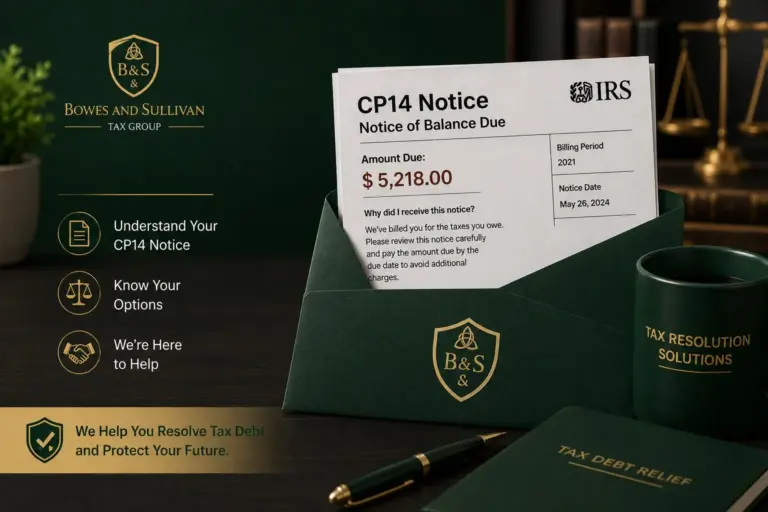
A CP14 notice is the IRS’s first official bill informing you that you have unpaid taxes, penalties, or interest. It serves as a formal Notice of Tax Due and Demand for Payment under Internal Revenue Code (IRC) §6303. The IRS sends this notice to explain what you owe and allow you to pay the balance or take action before additional collection steps may begin.
Notice of Tax Due and Demand for Payment — and Why the IRS Sends It (IRC §6303)
A CP14 notice is the IRS’s first official bill telling you that you have an unpaid tax balance. It is sent after the IRS processes your tax return and shows the amount you owe, including any penalties and interest.
Under Internal Revenue Code (IRC) §6303, the IRS must send this notice after assessing your tax liability. The notice explains how much you owe, when payment is due, and how you can pay or contact the IRS if you disagree with the balance.
| What You’ll See | What It Means |
| Tax year | The year the tax balance relates to |
| Total amount due | Tax, penalties, and interest owed |
| Notice date | The date the IRS issued the notice |
| Payment deadline | Usually, 21 days from the notice date |
| Payment instructions | Ways to pay online, by mail, or through a payment plan |
| IRS contact information | Who to contact if you have questions or disagree |
A CP14 notice is not a lien or levy, but it should not be ignored. Responding promptly can help you avoid additional penalties and future collection actions.
Why You Received a CP14
Receiving a CP14 notice does not always mean you made a major mistake. In most cases, it simply means the IRS believes you still owe taxes, penalties, or interest. Understanding the reason behind the notice can help you decide the right next step.
Filed But Didn’t Pay, Extension Misunderstandings, and IRS Adjustments or Income Mismatches
You can receive a CP14 notice, IRS letter for several reasons. In most cases, it means the IRS believes you still owe taxes, penalties, or interest after processing your return. Understanding why you received the notice can help you choose the right next step.
1. You filed your tax return but did not pay the full amount: This is the most common reason. If you filed your return but did not pay all the taxes due, the IRS will send a CP14 notice showing the remaining balance, plus any penalties and interest.
2. You filed an extension but did not pay: A filing extension gives you more time to submit your tax return, not more time to pay your taxes. If you owed taxes by the original due date and did not pay them, the IRS may charge penalties and interest and issue a CP14 notice.
3. Penalties and interest were added: Even if you eventually paid your taxes, filing or paying late can result in penalties and interest. These additional charges may create a balance that triggers a CP14 notice.
4. The IRS adjusted your return: The IRS compares your return with information from employers, banks, and other sources. If it finds missing income or other discrepancies, it may adjust your return and send a CP14 notice for the additional amount due.
5. An IRS processing error occurred: In some cases, the IRS may send a notice even after a payment has been made due to processing delays or administrative errors. If you believe this happened, review your IRS account and payment records before taking further action.
Also Read: How To File Back Taxes in 2026
How to Read It and Find Your Deadline
Before taking any action, carefully review your CP14 notice. Understanding the information on the notice and knowing your response deadline can help you avoid additional penalties and make the right decision.
The Billing Summary and Your Response Window (Typically 21 Days)
Your CP14 notice includes important details about your tax balance and when you need to respond. Here are the key sections to review:
Step 1: Find the notice date: Look for the notice date in the upper right corner. Your response deadline is based on this date, not the day you received the letter.
Step 2: Review the amount due: Check the billing summary, which lists the tax owed, penalties, and interest. Compare these amounts with your tax return and payment records.
Step 3:Know your deadline: The CP14 response deadline is usually 21 days from the notice date if your balance is under $100,000. If you owe $100,000 or more, you generally have 10 days to respond.
Step 4:Check the payment voucher: If you plan to pay by mail, use the payment voucher attached to the notice so the IRS applies your payment correctly.
Important: If you qualified for a disaster-related filing extension, your response time may be different. Review your notice carefully and verify any extension that may apply to your situation.
Explore: IRS OIC Calculation Guide
How to Respond: Agree, Disagree, or Can’t Pay
After reviewing your CP14 notice, the next step is deciding how to respond. The best option depends on whether you agree with the amount owed, believe the balance is incorrect, or are unable to pay. Acting quickly can help you avoid additional penalties, interest, and future collection actions.
Paying or Setting Up a Plan, Disputing the Balance, or Requesting Hardship
There is no one-size-fits-all response to a CP14 notice. Review your situation carefully and choose the option that best matches your circumstances.
If you agree with the balance:
- Pay the full amount by the deadline using IRS Direct Pay, EFTPS, check, or money order.
- Request a short-term extension if you need extra time but expect to pay in full within 120 days.
- Apply for an installment agreement if you need to make monthly payments.
- Ask about penalty abatement if you qualify based on reasonable cause or a first-time penalty waiver.
If you disagree with the balance:
- Review your tax return and payment records carefully.
- Check your IRS account or transcript to confirm that all payments were properly credited.
- Contact the IRS using the number on the notice or send a written explanation with supporting documents.
- Request a correction if you believe the IRS made an error or applied your payment incorrectly.
If you can’t pay:
- Request the Currently Not Collectible (CNC) status if paying would create financial hardship.
- Explore an Offer in Compromise if you may qualify to settle your tax debt for less than the full amount.
- Speak with a qualified tax professional who can review your options and communicate with the IRS on your behalf.
Also Read: What is CP2000 Notice
What Happens If You Ignore It (and How to Spot a Scam)
Ignoring a CP14 notice will not make the balance go away. If you do not respond, the IRS may continue sending collection notices and eventually take stronger enforcement actions. It is also important to know how to identify legitimate IRS communications and avoid common tax scams.
The CP501 → CP503 → CP504 → LT11 Path, and Why Real Notices Only Arrive by Mail
If you ignore a CP14 notice, the IRS generally follows a standard collection process by sending additional notices before taking more serious action.
| Notice | What It Means |
| CP501 | Second reminder that your balance is still due |
| CP503 | Third notice with increased urgency |
| CP504 | Final reminder before certain levy actions, including possible state tax refund offsets |
| LT11 | Final Notice of Intent to Levy and your right to request a hearing |
The CP504 signals that the situation is becoming more serious. If you continue to ignore IRS notices, the agency may take additional collection steps. The LT11 gives you the right to request a Collection Due Process hearing, but you generally have only 30 days to do so.
How to Spot a Scam
The IRS usually sends official tax notices through the mail. Be careful if someone claiming to be from the IRS:
- Calls and demands immediate payment
- Sends unexpected emails or text messages about a tax bill
- Asks you to pay with gift cards, wire transfers, or cryptocurrency
- Threatens immediate arrest, deportation, or other serious consequences
If you receive a suspicious call, email, or text message, do not share your personal or financial information. Instead, contact the IRS directly through its official channels to confirm whether the communication is legitimate.
Explore: Missed your Form 941 filings?
When to Get Help (and How Bowes & Sullivan Responds for You)
A CP14 notice is often easier to resolve when you act quickly and choose the right response. If you are unsure whether the balance is correct or which IRS relief option fits your situation, professional guidance can help you avoid unnecessary costs and delays.
How Bowes & Sullivan Helps You Respond
At Bowes & Sullivan Tax Group, we work directly with the IRS to help clients resolve CP14 notices and other tax issues. Our approach includes:
- Reviewing your CP14 notice and IRS transcripts to verify that the balance is accurate
- Evaluating all available options, including payment plans, penalty abatement, Currently Not Collectible (CNC) status, and an Offer in Compromise
- Communicating with the IRS on your behalf and handling the response process
- Taking timely action to help prevent additional penalties and reduce the risk of further collection activity
If you have received a CP14 notice and are unsure what to do next, speaking with a qualified tax professional before your response deadline can help you make an informed decision.
Conclusion
A CP14 notice is the IRS’s first request for payment, not an audit, lien, or levy. Responding promptly can help you avoid additional penalties, interest, and future collection actions. Whether you choose to pay the balance, dispute it, or explore a payment plan, understanding your options is the best way to protect your finances and resolve the issue correctly.
If you have received a CP14 notice and are unsure what to do next, Bowes & Sullivan Tax Group is here to help. Our experienced team can review your notice, explain your options, and work directly with the IRS on your behalf. Contact us today for a personalized strategy before your response deadline passes.
FAQs
How long do I have to respond to a CP14 notice?
You usually have 21 days from the date printed on your CP14 notice to respond if your balance is under $100,000. If you owe $100,000 or more, the deadline is generally 10 days. The countdown starts from the notice date, not the day you receive it.
What happens if I cannot pay my CP14 balance?
If you cannot pay the full amount, you still have options. You may qualify for a short-term extension, a monthly payment plan, Currently Not Collectible (CNC) status, or an Offer in Compromise. The most important thing is to respond instead of ignoring the notice.
Is a CP14 notice serious or just a routine letter?
A CP14 notice is the IRS’s first official bill for unpaid taxes. While it is a routine notice, it should be taken seriously because it begins the IRS collection process. Responding early can help you avoid additional penalties and future collection actions.
What notice comes after a CP14?
If you do not respond, the IRS generally sends a CP501, followed by a CP503, then a CP504, and finally an LT11 notice. Each notice increases the urgency and may lead to stronger collection actions if the balance remains unpaid.
I received a CP14 in Georgia does the state get involved too?
A CP14 notice is a federal IRS notice and does not come from the Georgia Department of Revenue. However, if you also owe state taxes or the IRS shares relevant information, Georgia may take separate action. It is a good idea to review both your federal and state tax accounts.